ZOOSI.CO
Bringing language learning to life through illustration, play, and AI
ZOOSI CASE STUDY • 2026Zoosi (pronounced ‘zoo-see’) is an independent passion project that grew from Hmong animal flashcards into a live website with multilingual games and a colorful geometric illustration system. Learn more here.
ROLEDesigner & Illustrator
TIMELINE2026
Visual Identity, Illustration, Product Design, AI-Assisted Development
FOCUSFlashcards, Memory Game, Spelling Bee, Jigsaw Puzzle
EXPERIENCEA personal gift that grew into a playful learning experience
01. OVERVIEWZoosi began with a gift for my nieces and nephews. I wanted something educational, culturally meaningful, and beautifully made, so I created animal flashcards in Hmong, my first language. Those cards became the foundation for Zoosi. Using AI to help write and refine the code, I built the current games website through vibe coding, bringing the artwork into a playable, multilingual experience.
FLASHCARD SET IN BOTH HMONG WHITE AND HMONG GREENUsing AI to turn visual ideas into playable experiences
I developed Zoosi’s animal artwork around simplified forms, bold colors, and flat vector illustration. AI-assisted development gave me a way to bring that visual system into a working website. I vibe coded the whole site, using AI to help translate my design intentions into code and refine the experience as it took shape. I illustrated all of the animals myself; no AI was used to generate the artwork.
The process connected designing and building. I could try an idea in the interface, see how it behaved, and use what I learned to guide the next iteration. AI opened up possibilities for UI, interactions, and motion, while giving me a practical reason to learn unfamiliar tools.
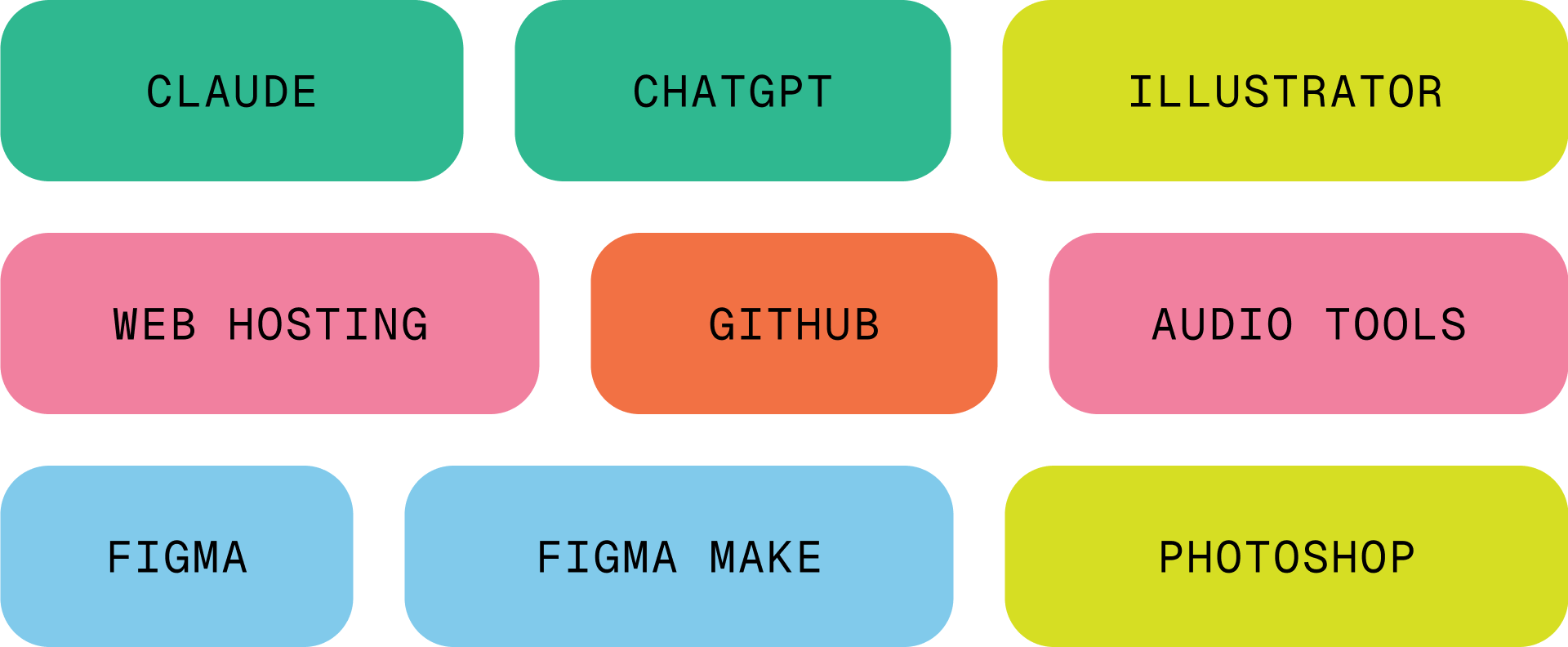
TOOLS USED ON THIS PROJECTZOOSI TRANSLATED INTO DIFFERENT GAMESFinding a visual language rooted in simple shapes
02. VISUAL RESEARCH & DISCOVERYThe original flashcards established Zoosi’s visual foundation: colorful animals built from geometric shapes. As the project expanded, the challenge was to carry that personality into a digital experience. The artwork needed to remain recognizable across different animals, screen sizes, and game formats while preserving the warmth of the original cards.
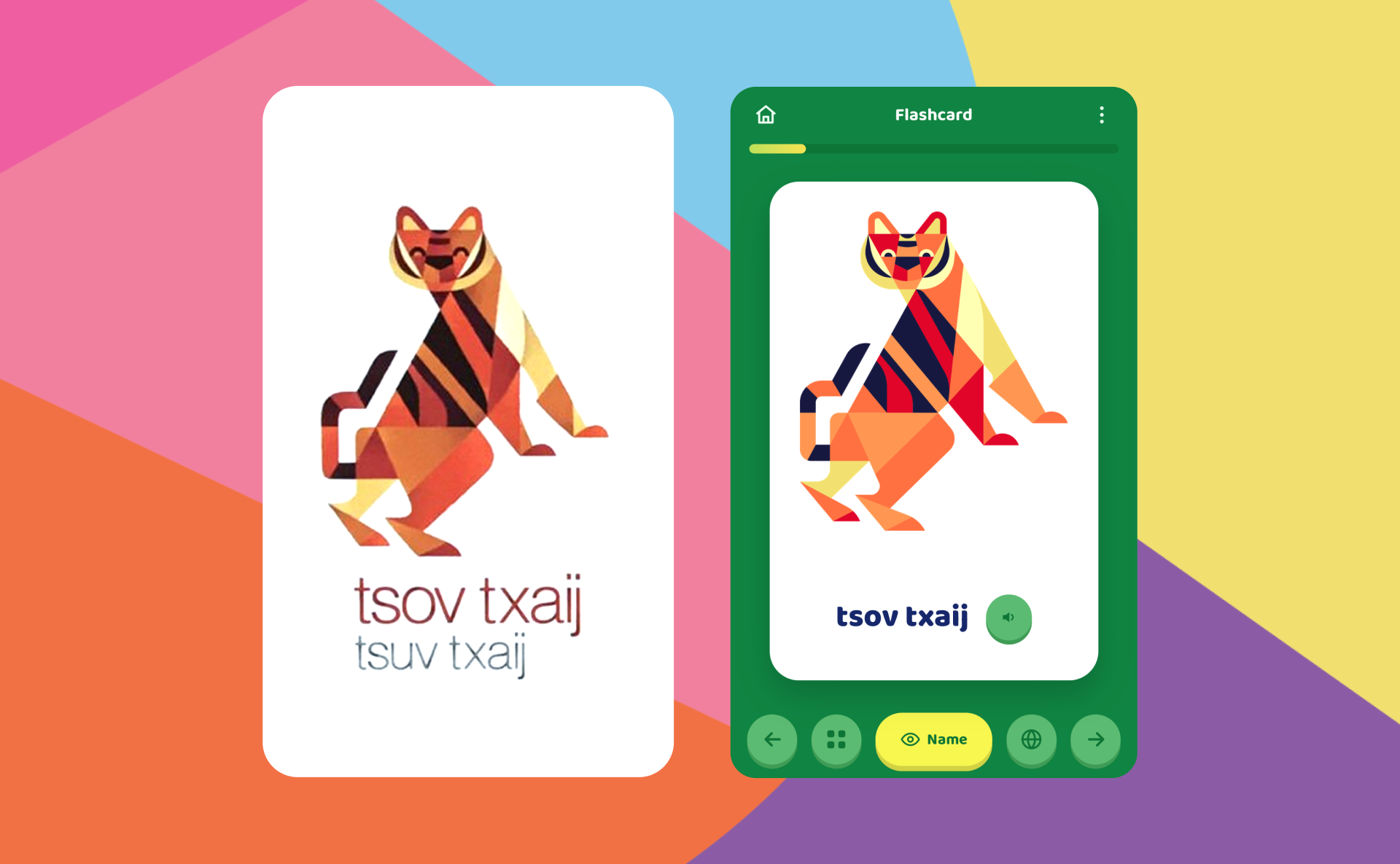
OLD FLASHCARD ART (LEFT) WITH TWO HMONG DIALECTS NEXT TO NEW FLASHCARD GAME (RIGHT) WITH VECTOR ARTBuilding an animal illustration system for play
03. DESIGN PROCESSI developed the animal artwork around simplified forms, bold colors, and flat vector illustration. Shared geometry connects the animals as a family, while distinctive features give each one its own personality. As Zoosi grew beyond flashcards, the illustrations became a common thread across the experience. The same animals could appear as matching cards, spelling prompts, and jigsaw puzzles, giving each game a familiar visual foundation.
ALL OF THE ANIMAL DESIGNSOne illustration system, different ways to interact
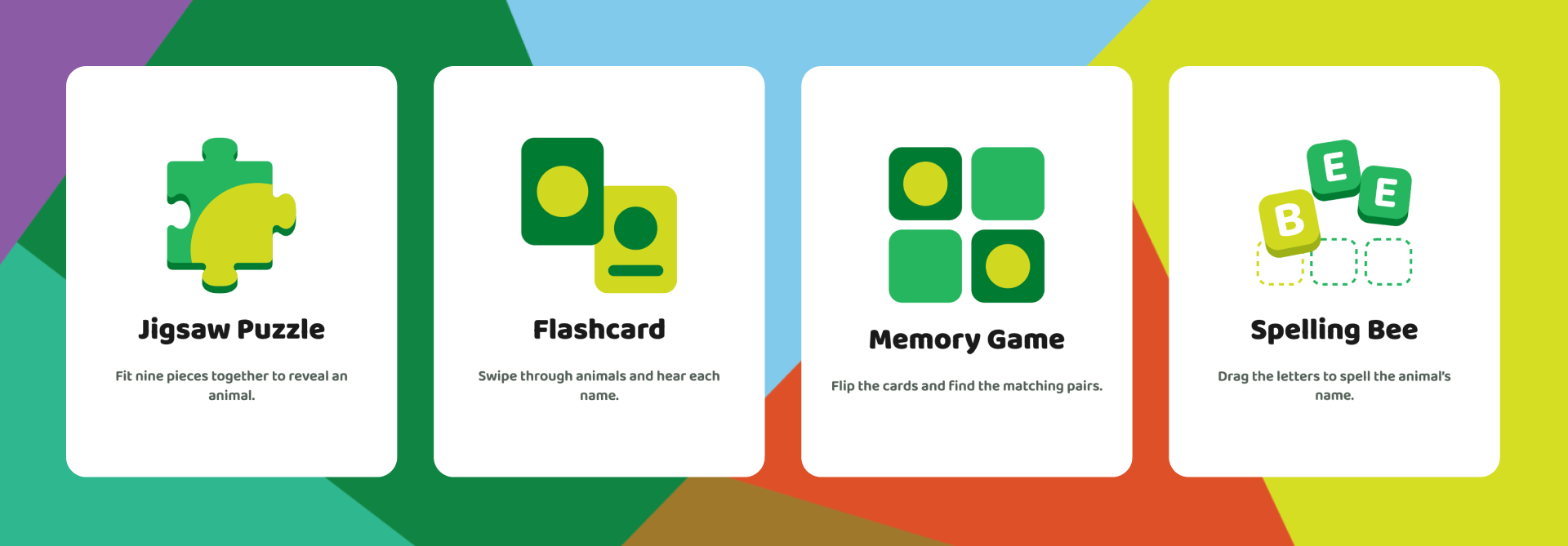
Each format creates a different interaction with the artwork. Flashcards pair animals with names and audio. Memory Game turns them into matching pairs, Spelling Bee connects them to letters, and Jigsaw Puzzle breaks them into pieces for players to reassemble.
JIGSAW PUZZLESPELLING BEEFLASHCARDMEMORY GAMEA consistent visual identity across a family of games
04. FINAL SYSTEMSZoosi brings its geometric animal artwork into a shared experience across Flashcards, Memory Game, Spelling Bee, and Jigsaw Puzzle. The illustrations connect the games visually, while each format offers a different way to explore the animals and their names. Language options include English, Hmong White, Hmong Green, and Spanish.
SHIPPED GAMES WITH MORE COMINGFrom Hmong flashcards to a multilingual games website
05. EXPANDING THE SYSTEMWhat began as a set of animal flashcards now supports several playable experiences at zoosi.co. AI-assisted development helped me extend Zoosi beyond flashcards into several playable formats. I could build on the existing animal artwork while exploring new game mechanics and interface ideas. Throughout that expansion, the original purpose stayed central: creating something playful and culturally meaningful, with Hmong language and heritage at its heart.
MOBILE SCREENSHOTS: HOME FEATURED GAMES (LEFT), HOME GAMES (CENTER), & MEMORY GAME LANGUAGE OPTIONS (RIGHT)Turning a personal idea into something people can play
06. IMPACTZoosi is now a live website where visitors can explore animal names through flashcards, matching, spelling, and puzzles. Bringing the project online made the experience available beyond the original physical cards, while preserving the illustrations and cultural motivation that started it.
Explore the games and learn more about Zoosi at:
MEMORY GAME ON MOBILE07. RETROSPECTIVEKey takeaways
01. Learn the tools by making something
I didn’t start Zoosi knowing every tool I would need to build it. Working on something I cared about gave me a reason to experiment with AI, learn unfamiliar tools, and work through problems as they came up. Each experiment helped me understand what was possible and gave me another way to move the project forward.
02. Let new tools expand your design thinking
Using AI opened up possibilities for Zoosi’s UI, interactions, and motion that I hadn’t considered before. It changed my process: I could try an idea, see it working, and refine it through use. That made building part of how I explored the user experience and helped me turn static designs into something people could play.